
Amboseli is the most famous elephant landscape in Africa. Nowhere else can visitors reliably see large elephant herds, legendary big tuskers, and multi-generation family groups moving across open plains with Mount Kilimanjaro as a backdrop. Scientifically, culturally, and visually, elephants in Amboseli represent the gold standard for elephant research and conservation.
1. Where Amboseli Is — and Why Elephants Thrive Here
📍 Amboseli National Park
Amboseli lies in southern Kenya along the Kenya–Tanzania border, directly north of Mount Kilimanjaro. Although rainfall is low, elephants persist here because of permanent groundwater-fed swamps, sustained by snowmelt from Kilimanjaro filtering underground into the basin.
Why this matters for elephants
- Reliable water year-round
- Open grasslands for visibility and movement
- Access to surrounding Maasai community lands, enabling seasonal migration
Amboseli elephants do not live only inside the park—they depend on a much larger ecosystem.
Where to See Amboseli Elephants
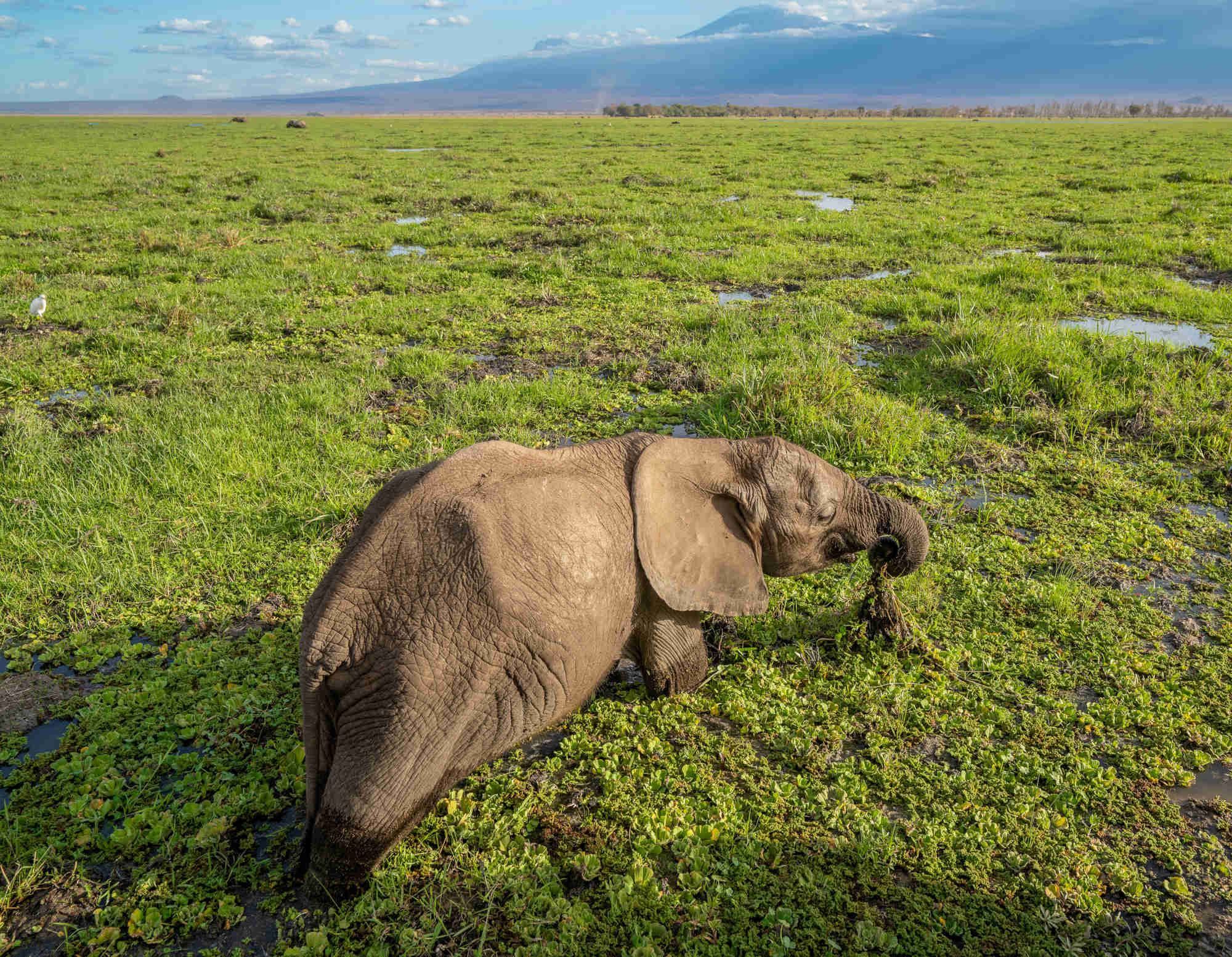
Elephants in Amboseli are driven by permanent groundwater-fed swamps, not by rainfall alone. These swamps sit mainly in the central and eastern parts of the park, and elephants move between them and surrounding plains daily.
Meanwhile, Mount Kilimanjaro lies south of the park, meaning:
- Best mountain views = southern and southeastern Amboseli
- Best elephant density = swamp systems and surrounding plains
The best stays are those that balance both.
2. The Amboseli Elephant Population (Numbers & Structure)
Amboseli supports approximately 1,600–1,900 African savanna elephants, making it one of the best-studied elephant populations on Earth.
Key features of the population
- All individuals are known, named, and tracked
- Family lineages span 50+ years
- Births, deaths, dominance shifts, and migrations are documented
This level of detail is unmatched globally.
3. Scientific Authority: The Research That Made Amboseli Famous
🔬 Amboseli Elephant Research Project (AERP)
Founded in 1972, AERP is the longest-running elephant research project in the world. It has followed individual elephants from birth to death for over five decades.
What AERP has revealed
- Elephant social intelligence and memory
- The role of matriarchs in family survival
- Long-term impacts of drought and climate change
- Consequences of poaching on elephant society
- Reproductive lifespans and calf survival patterns
Many foundational insights into elephant behavior globally originate from Amboseli data.
4. Elephant Social Structure in Amboseli


Family units
- Led by an experienced matriarch
- Include daughters, sisters, aunts, calves
- Bonds are lifelong and inherited matrilineally
Bulls
- Leave family groups in adolescence
- Live solitary or in loose bachelor groups
- Enter musth—a high-testosterone reproductive state—periodically
Amboseli bulls are among the largest and oldest in Africa.
5. Big Tuskers of Amboseli (Global Icons)
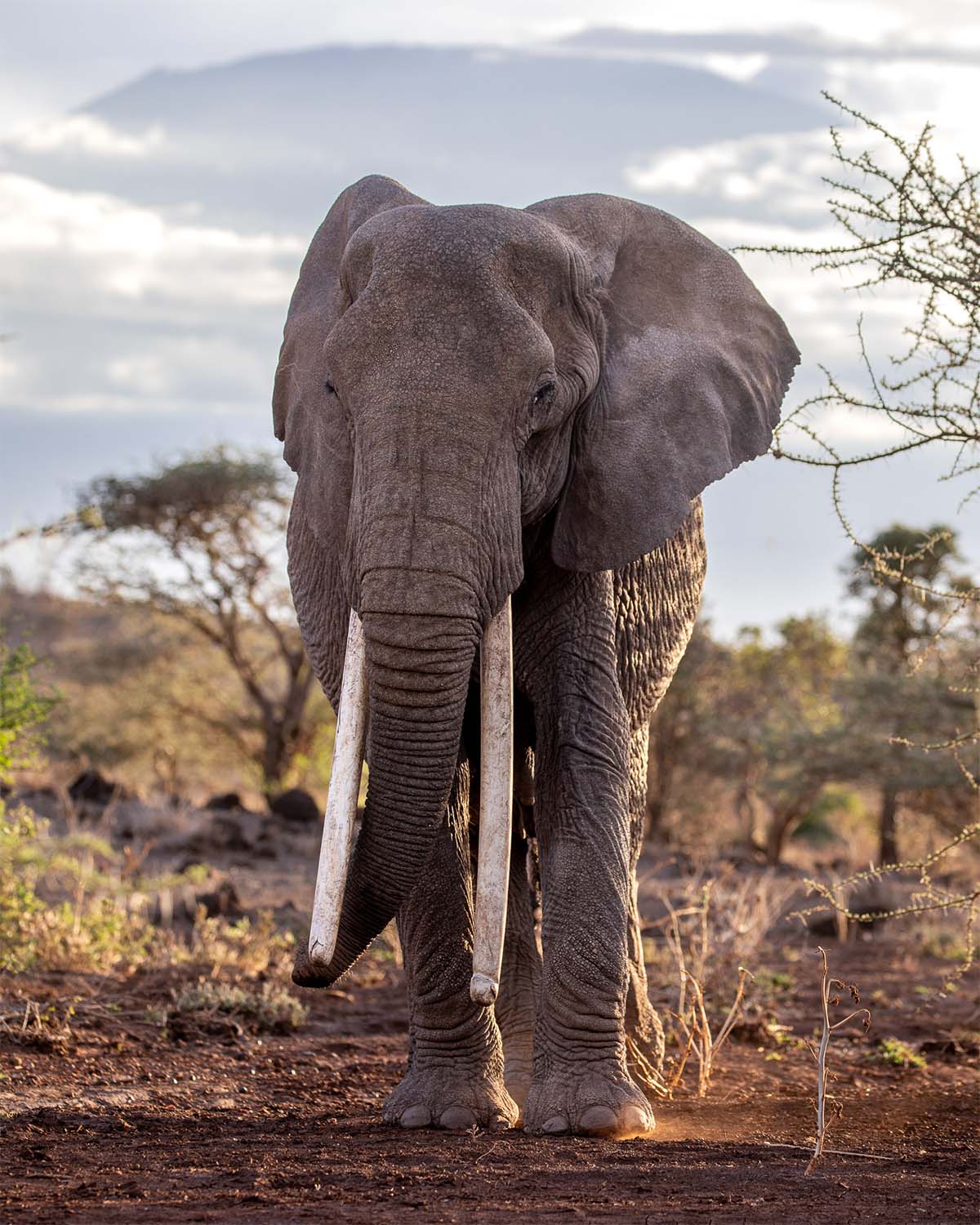
Amboseli is world-famous for super tuskers—bull elephants whose tusks weigh 45 kg (100 lb) or more per tusk.
Notable Amboseli tuskers
- Craig the Elephant – legendary bull who died naturally in 2026
- Tim (d. 2020) – symbol of successful protection
- Multiple living bulls still carry exceptional ivory
These elephants survived the worst poaching decades, making them living conservation triumphs.
6. Behavior You Can Observe in Amboseli
Amboseli’s open terrain allows unusually clear observation of elephant behavior.
Commonly observed behaviors
- Greeting ceremonies between families
- Calves being disciplined or assisted
- Dust bathing and mud wallowing
- Bulls sparring or testing dominance
- Matriarchs leading families across long distances
Because elephants are habituated but not tame, behavior is natural and unforced.
7. Seasonal Movements & Migration
Amboseli elephants are semi-migratory.
Wet season
- Disperse widely into Maasai lands
- Feed on fresh grasses and browse
Dry season
- Concentrate in swamp systems inside the park
- Visibility and herd density increase
This movement underscores why corridor protection is critical.
8. Conservation Challenges Facing Amboseli Elephants
Key threats
- Habitat fragmentation outside the park
- Human–elephant conflict on farms and settlements
- Climate change, increasing drought frequency
- Legacy impacts of historical poaching
Conservation response
- Community conservancies
- Land lease programs with Maasai landowners
- Anti-poaching patrols
- Elephant corridor mapping
Amboseli’s future depends on coexistence beyond park borders.
9. Elephants, Maasai Communities & Coexistence
🧑🏽🌾 Maasai communities
Elephants and Maasai pastoralists have shared this landscape for centuries.
Modern coexistence tools
- Community scouts and rangers
- Compensation and land-lease schemes
- Tourism revenue sharing
- Education and early-warning systems
Amboseli is now considered a global model for community-led elephant conservation.
10. Tourism: Seeing Elephants in Amboseli
Why Amboseli is exceptional for visitors
- Large herds visible year-round
- Open terrain = clear photography
- Iconic Kilimanjaro backdrop
- Frequent sightings of tuskers
Best times
- Dry season (June–October, January–February): dense herds, dramatic scenes
- Early morning & late afternoon: optimal light and activity
Amboseli is widely regarded as the best place in Africa to photograph elephants.
11. How Amboseli Elephants Differ from Other Populations
| Feature | Amboseli | Other African Parks |
|---|---|---|
| Research depth | Exceptional (50+ years) | Limited |
| Big tuskers | High | Rare |
| Visibility | Very high | Variable |
| Community integration | Strong | Often weaker |
| Individual IDs | Complete | Rare |
Amboseli is not just scenic—it is scientifically irreplaceable.
12. Why Amboseli Matters Globally
Amboseli elephants have shaped:
- Global elephant conservation policy
- Understanding of animal intelligence
- Long-term climate impact research
- Anti-poaching strategy design
Protecting them protects knowledge, heritage, and hope.
Best Places to Stay in Amboseli for Views (By Location, Not Luxury Tier)
A. Southern & Central Amboseli (Best All-Round Choice)
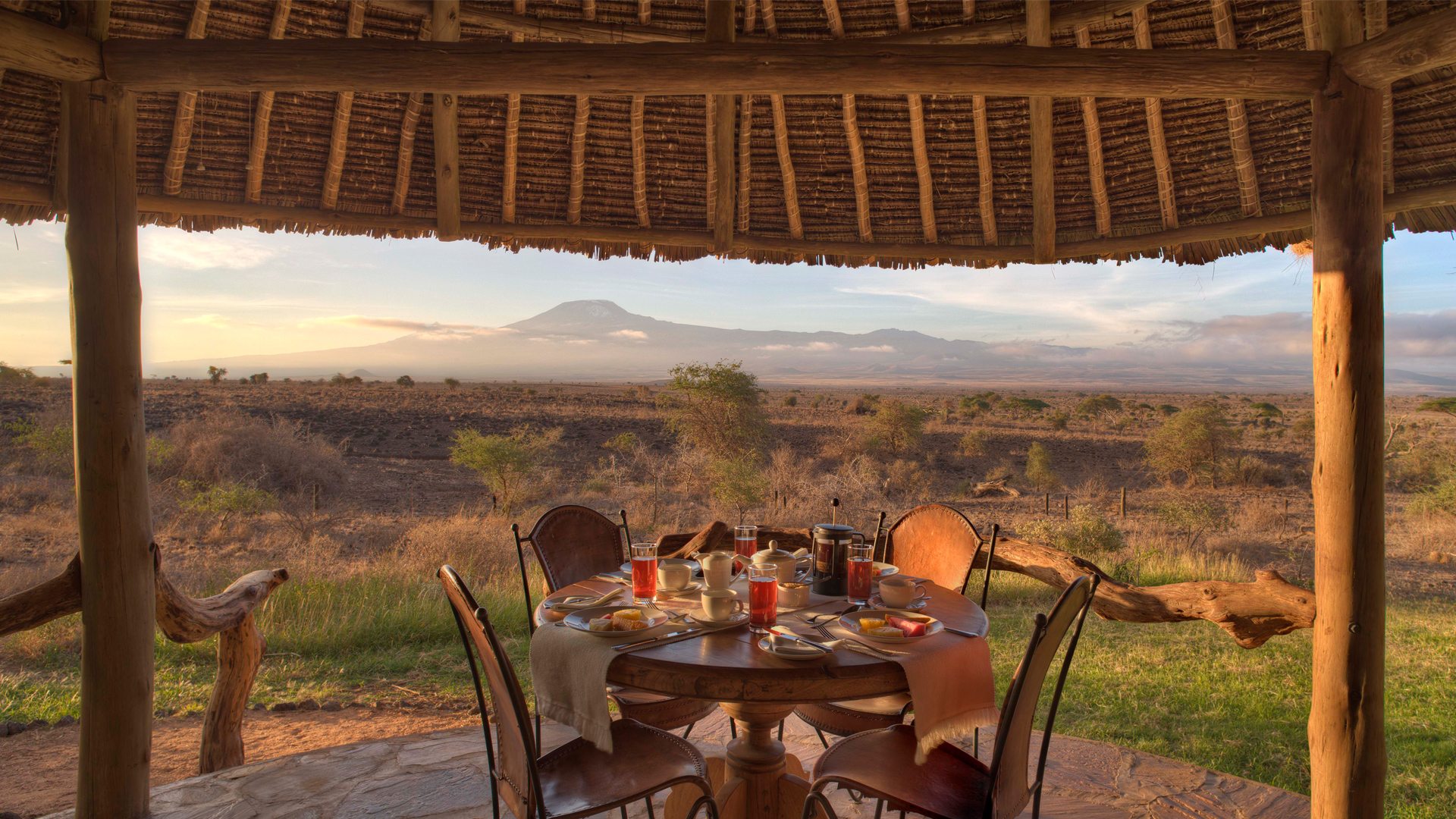
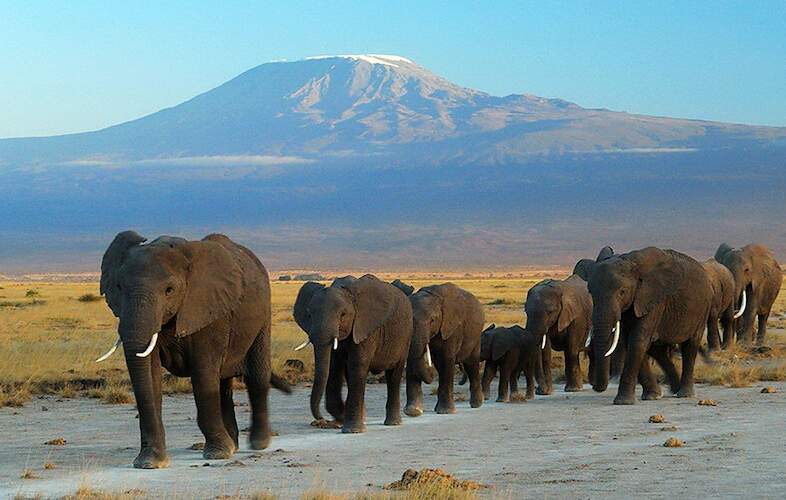

These areas offer the best combination of elephants + Kilimanjaro views.
⭐ Ol Tukai Lodge
- Located inside the park, close to swamps
- Elephants often walk through the lodge grounds
- Direct sightlines to Kilimanjaro on clear mornings
- One of the most reliable bases for elephant photography
⭐ Amboseli Serena Safari Lodge
- Elevated position overlooking plains
- Wide-angle views of elephants moving below
- Kilimanjaro visible from public areas and some rooms
⭐ Tortilis Camp
- Located on private conservancy land just outside the park
- Famous for unobstructed Kilimanjaro views
- Elephants frequently move through the surrounding landscape
- Excellent for photography, walking safaris, and low crowd density
Expert verdict:
If your priority is elephants + mountain views, this zone is the safest choice.
B. Eastern Amboseli (Best for Dense Elephant Activity)
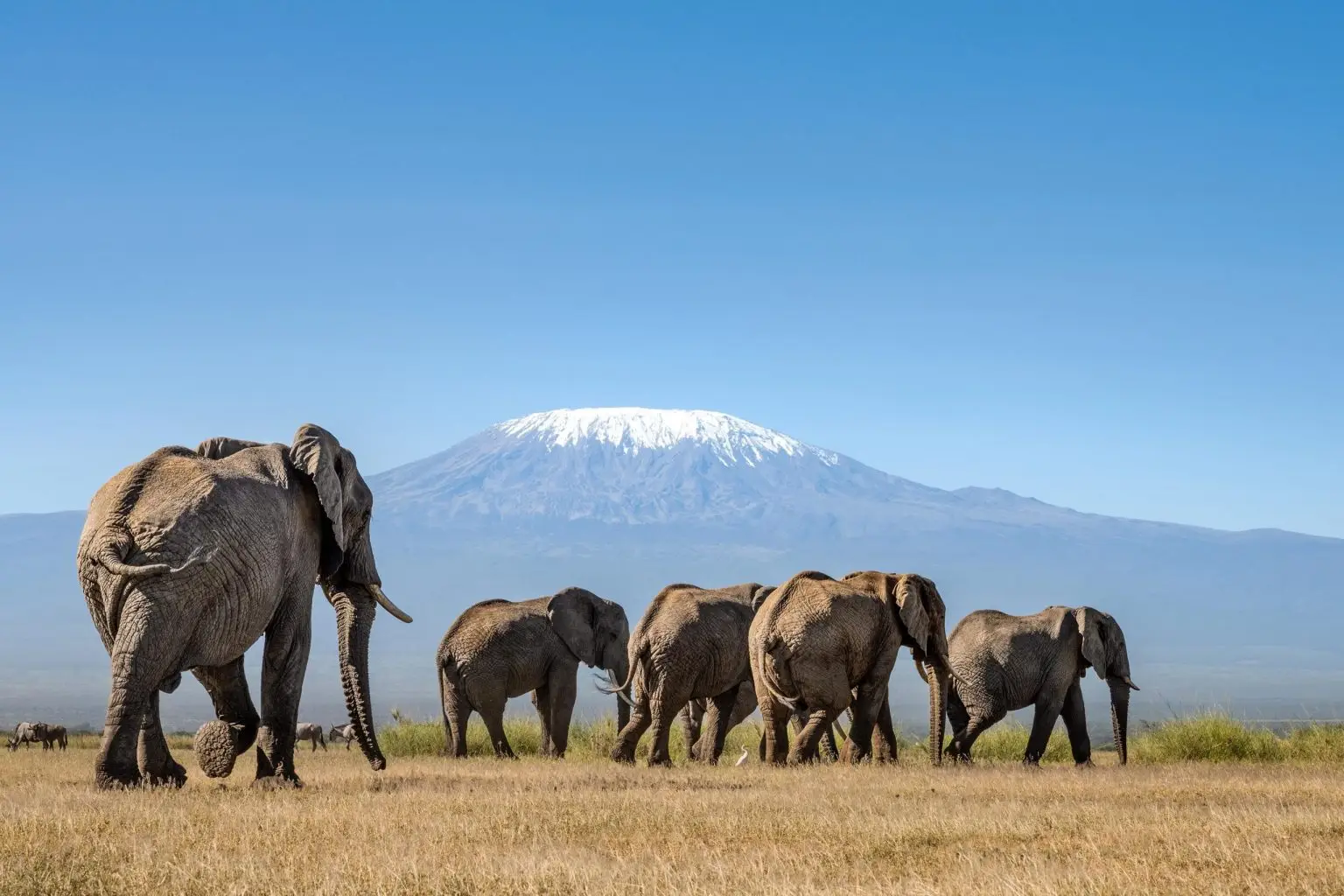
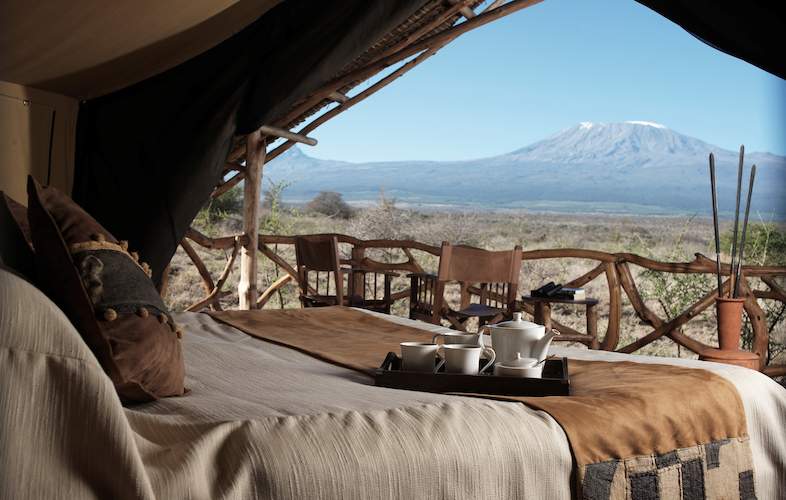
Eastern Amboseli is closest to some of the most active swamps.
⭐ Elerai Camp
- Set on a private conservancy east of the park
- Excellent for elephant traffic, especially mornings and evenings
- Mountain views are good but slightly angled depending on weather
This area is ideal if:
- Elephants are your top priority
- You want quieter drives and fewer vehicles
C. Northern Amboseli (Budget-Friendly but Limited Views)


Northern areas are farther from Kilimanjaro and main swamps.
⭐ Sentrim Amboseli
- Good access and affordability
- Elephant sightings are possible but less consistent
- Mountain views are often distant or obscured
Expert verdict:
Choose northern Amboseli only if budget or logistics are the main constraint.
3. Best Locations Inside Amboseli to See Elephants
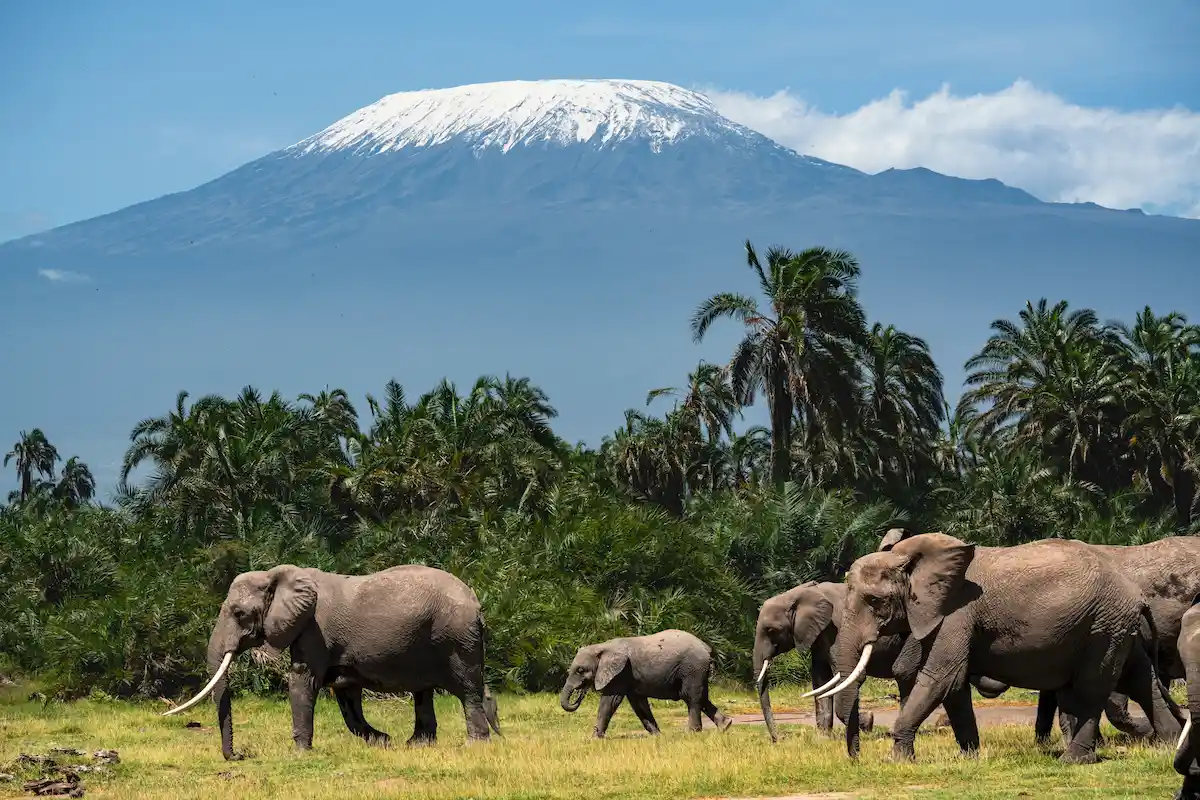

1️⃣ Enkongo Narok Swamp
- The single most reliable elephant location in Amboseli
- Permanent water even in extreme drought
- Families congregate here in large numbers
- Excellent for close, respectful viewing
2️⃣ Longinye Swamp
- Slightly less crowded than Enkongo
- Frequent movement of breeding herds
- Strong photographic potential with open backgrounds
3️⃣ Observation Hill
- Panoramic vantage point
- Allows you to see multiple elephant groups at once
- Best for understanding movement patterns rather than close encounters
4️⃣ Open Plains Between Swamps
- Elephants move morning and late afternoon
- These crossings produce classic shots of elephants walking in lines with Kilimanjaro behind them
Best Time of Day for Elephants + Views
| Time | What You’ll See |
|---|---|
| Early morning (6:30–9:00) | Clear Kilimanjaro views, elephants leaving swamps |
| Midday | Herds resting in shade or water |
| Late afternoon (4:30–6:30) | Elephants returning to swamps, dramatic light |
| After rain | Increased movement, cleaner air, better visibility |
Expert Takeaway
Elephants in Amboseli are the most intensively studied, culturally significant, and visually iconic elephant population in the world.
They represent:
- The past (survivors of poaching)
- The present (models of coexistence)
- The future (how elephants can survive alongside people)
Any serious conversation about African elephants begins—and inevitably returns—to Amboseli.
Related: