
Amboseli National Park is Kenya’s defining elephant-and-Kilimanjaro landscape.
The Park is a semi-arid protected area where large elephant herds, permanent swamps, open savanna, Maasai pastoral lands, dry lakebed dust, and Mount Kilimanjaro’s groundwater influence meet in one of Africa’s most recognizable conservation systems.
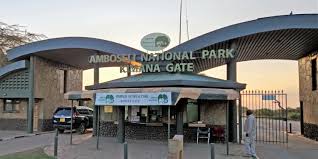
It is famous as a safari destination, but its deeper significance is ecological: Amboseli is a small protected core inside a much larger wildlife, water, culture, and land-use system.
Kenya Wildlife Service describes Amboseli as the Home of the African Elephant, with rich biodiversity, four members of the Big Five, swamps, wetlands, birdlife, Kilimanjaro views, Maasai cultural context, and major visitor activities such as game viewing, birdwatching, photography, camping, cultural tourism, and balloon safaris.

Amboseli.ke presents Amboseli National Park as the protected core of a wider living rangeland system shaped by elephants, groundwater-fed wetlands, Maasai pastoralism, wildlife corridors, tourism, land-use change, and climate stress.
Its purpose is to help visitors understand not only Amboseli’s beauty, but the ecological connectivity, community stewardship, and conservation choices required to keep the landscape alive.
What is Amboseli National Park?
Amboseli National Park is a protected savanna and wetland landscape in southern Kenya, near the Kenya-Tanzania border, best known for large elephant herds, views of Mount Kilimanjaro, permanent swamps, dry alkaline plains, Maasai cultural landscapes, and one of the world’s longest-running wild elephant research histories.
It is one of Kenya’s most important parks for understanding how wildlife conservation depends on water, movement corridors, community lands, and responsible tourism.
Quick facts about Amboseli National Park
| Feature | Amboseli-specific detail |
|---|---|
| Official Name | Amboseli National Park |
| Year Founded | Gazetted as National Park in 1974 |
| Historical context | Part of Southern Game Reserve founded in 1906 |
| Managing Authority | Kenya Wildlife Services |
| Approximate Size | About 390 km² |
| Main identity | Elephant stronghold and Kilimanjaro-view safari landscape |
| Official KWS description | Home of the African Elephant |
| Location | Southern Kenya, Kajiado County, near the Tanzania border – About 240 km south-east of Nairobi, at the northern foot of Mount Kilimanjaro |
| Landscape type | Semi-arid savanna basin with swamps, acacia woodland, rocky thorn bush, marshland and dry lakebed |
| Signature backdrop | Mount Kilimanjaro |
| Famous wildlife | Elephants, lions, buffalo, zebra, giraffe, wildebeest, gazelles, hyenas, cheetahs, hippos and birds |
| Birdlife | Over 400 bird species recorded in the wider Amboseli system, including waterbirds and raptors |
| Major landmarks | Lake Amboseli, Observation Hill / Nomatior, Enkong Narok Swamp, Ol Tukai woodland, Kimana area |
| Hours | 6 AM to 6 PM |
| Ticketing/Entry | KWS Entry Ticket required – Purchased online on KWSPay/eCitizen |
| Main gates | Iremito Gate, Kimana Gate and Meshanani Gate |
| Air access | Kimana airstrip for light aircraft |
| Conservation frame | A park whose wildlife depends on wetlands, corridors, group ranches, conservancies and Maasai pastoral landscapes |
| Conservation Significance | UNESCO-Mab Biosphere Reserve in 1991. |
| Global recognition | UNESCO World Heritage Tentative List site submitted on 30 June 2023 |
UNESCO lists Amboseli National Park on Kenya’s World Heritage Tentative List and describes it as one of the world’s best wildlife-viewing destinations, with large elephant herds, 400 bird species, raptors, wetlands, and endangered species such as Malagasy Pond Heron.
Why Amboseli National Park matters
Amboseli matters because it makes conservation visible.
In many parks, ecological processes are hidden behind dense vegetation or vast distance. In Amboseli, the structure of the landscape is exposed. Visitors can see the dry lakebed, the green swamps, the open plains, the elephant pathways, the Maasai settlements beyond the park, and Mount Kilimanjaro rising above the basin. The whole system teaches a clear lesson: wildlife is not sustained by scenery alone. It is sustained by water, space, mobility, local tolerance, governance, and long-term ecological memory.
Amboseli National Park is therefore not just a safari destination. It is:
- an elephant refuge;
- a wetland-dependent dryland ecosystem;
- a Kilimanjaro-influenced hydrological basin;
- a Maasai pastoral landscape;
- a birding and raptor area;
- a scientific field site;
- a tourism economy;
- a corridor-dependent conservation system;
- a national park whose future depends on land beyond its boundary.
That is the core Amboseli identity. Every serious guide to the park should begin there.
Below table summarizes what makes Amboseli unique and why it stands out:
| Category | Amboseli-specific values |
|---|---|
| Biodiversity values | Habitat diversity, landscape diversity, big tusker elephants, Maasai giraffe, ungulates, large carnivores, rich birdlife and wildlife corridors |
| Scenic values | Mount Kilimanjaro, swamps and Lake Amboseli |
| Socio-cultural values | Authentic Maasai culture, rich history, employment, tourism, long-term research programmes, Biosphere Reserve status and community wildlife conservation initiatives |
Location and landscape setting
Amboseli National Park lies in southern Kenya, close to the Tanzania border, with Mount Kilimanjaro forming the dominant southern skyline. The park sits within a wider Amboseli ecosystem that extends beyond the protected area into community lands, conservancies, group ranches, and cross-border ecological linkages.
Amboseli Park lies in Kajiado County, Kenya, near the Tanzania border. It is about 240 km (150 miles) southeast of Nairobi and is easily accessible by road or air.
| Feature | Details |
|---|---|
| Location | Southern Kenya, in Kajiado County |
| Distance from Nairobi | About 240 km south-east of Nairobi |
| Mountain setting | At the northern foot of Mount Kilimanjaro |
| Border context | About 5 km from the Tanzania border at its closest point |
| Central coordinates | Around 2°40′S and 37°15′E |
| Landscape identity | Semi-arid savanna basin with swamps, grasslands, woodland and dry lakebed landscapes |
KWS lists several access routes into Amboseli, including routes from Nairobi through Emali toward Iremito Gate, through Kimana toward Kimana Gate, and through Namanga toward Meshanani Gate. It also notes that Kimana airstrip serves light aircraft access.
Key places and landscapes in and around Amboseli
| Places/Attractions | What it is | Why it matters |
|---|---|---|
| Mount Kilimanjaro | The dominant mountain backdrop south of the park | Shapes Amboseli’s visual identity and contributes to groundwater-fed wetland systems |
| Lake Amboseli | A temporary, alkaline lakebed that is often dry | Creates the park’s famous dust plains and seasonal wetland pulses |
| Enkong Narok Swamp | A permanent swamp system | Key refuge for elephants, buffalo, hippos, waterbirds and dry-season grazing |
| Ol Tukai woodland | A woodland oasis with yellow fever trees and palms | Important wildlife zone associated with elephants, lions and shade-dependent species |
| Observation Hill / Nomatior | A panoramic viewpoint | Helps visitors understand the spatial structure of the park |
| Kimana area | Eastern access and corridor landscape | Links park access, conservancy context and wildlife movement |
| Imerishari Hill | Low Use Zone viewpoint identified for future trails and picnic use | |
| Kitirua Hill | Low Use Zone viewpoint with panoramic landscape potential | |
| Chyulu Hills linkage | Volcanic highland landscape toward Tsavo | Part of the broader southern Kenya conservation context |
| Maasai group ranches | Community lands around the park | Hold the dispersal areas and corridors that keep Amboseli ecologically functional |
Amboseli should not be read as an isolated park. Its boundary protects the core, but the ecological system extends outward into community and conservancy lands.
Park Zoning:
Below table shows how Amboseli is organized for conservation and tourism.

| Zone | Description |
|---|---|
| High Use Zone | Prime wildlife habitat and prime viewing zone |
| High Use Zone features | Longinye Swamp, Enkongo Narok Swamp, Ol Tukai Orok Swamp, Ol Tukai enclave, park headquarters, tourist lodges and Observation Hill |
| Low Use Zone | Western Kitirua area, seasonal Lake Amboseli, northern and eastern parts of the park |
| Low Use Zone character | Lower tourist use, low road density, no tourist accommodation and panoramic viewpoints |
| Habitat Restoration Zone | Areas containing established or planned habitat restoration enclosures |
The meaning of Amboseli
The name Amboseli is widely linked to the Maasai word Empusel, meaning salty dust place. UNESCO uses this etymology in its Tentative List description of the park.
That phrase is more than a poetic label. It describes the physical identity of the park: a dry, wind-shaped basin where alkaline soils, seasonal flooding, bare lakebed surfaces, and animal movement produce the pale dust that defines many classic Amboseli photographs.
The dust is not emptiness. It is geology, hydrology, climate, and wildlife movement made visible.
Size, boundary and ecological scale
Amboseli National Park is relatively compact compared with Kenya’s largest protected areas, but it sits within a much wider ecological system. UNESCO describes the park as 39,206 hectares at the core of an approximately 8,000 km² ecosystem spreading across the Kenya-Tanzania border.
| Feature | Details |
|---|---|
| Approximate park area | About 390 km² |
| Ecosystem definition | Defined by the dry- and wet-season wildlife dispersal areas of Amboseli National Park |
| Boundary logic | Based on the migratory limits of major wildlife species |
| Wider ecosystem area in the plan | About 506,329 hectares in Loitokitok Sub County |
| Surrounding group ranches | Kimana/Tikondo, Olgulului/Ololarashi, Selengei, Mbirikani, Kuku and Rombo |
| Conservation meaning | The park depends on surrounding rangelands for wildlife dispersal and ecological continuity |
This distinction is essential. Amboseli’s safari experience is concentrated inside the park, but Amboseli’s conservation future is decided across the wider ecosystem.
The hydrology of Amboseli: water in a dryland system
The most important ecological fact about Amboseli is that it is a dryland park sustained by hidden water.
The landscape often appears arid, dusty and exposed, yet permanent swamps keep the system alive. KWS notes that water springs associated with Mount Kilimanjaro give rise to permanent swamps such as Enkong Narok, making them critical to wildlife in the Amboseli ecosystem.
Why the swamps are central to Amboseli
Amboseli’s swamps are not minor scenic features. They are the ecological engine of the park.
They support:
- elephant herds during dry periods;
- buffalo, hippos and grazing wildlife;
- waterbirds and wetland specialists;
- green forage when surrounding plains are dry;
- predator-prey interactions near water and grazing areas;
- year-round wildlife visibility for visitors.
In conservation terms, Amboseli is a lesson in dryland dependency. A small wetland system can carry disproportionate ecological weight when it is embedded in a semi-arid landscape.
The swamps that keep Amboseli alive.
| Wetland feature | Amboseli-specific detail |
|---|---|
| Enkongo Narok Swamp | One of the two major swamps described as the lifeline of Amboseli’s wildlife |
| Longinye Swamp | Second major swamp and part of the park’s prime wildlife habitat |
| Ol Tukai Orok Swamp | Doum-palm dominated swamp located in the High Use Zone |
| Wetland role | Sustains elephants, ungulates, birds and other wildlife through dry periods |
| Conservation importance | Wetlands are central to the park’s wildlife concentrations and visitor experience |
Main habitats of Amboseli National Park
KWS identifies Amboseli’s main habitats as savanna grassland, acacia woodland, rocky thorn bush, swamps and marshland. It also describes the park as part of a Pleistocene lake basin, with Lake Amboseli flooding during heavy rainy seasons and becoming dry and dusty during hot dry periods.
| Habitat | Park expression | Conservation role |
|---|---|---|
| Dry lakebed | Open, pale, alkaline, dusty plains | Creates Amboseli’s visual identity and seasonal flood habitat |
| Permanent swamps | Green wetland patches in a dry basin | Dry-season refuge for elephants, buffalo, hippos and birds |
| Savanna grassland | Open grazing areas | Supports zebra, wildebeest, gazelles and predators |
| Acacia woodland | Scattered tree cover and browse | Supports giraffe, elephants, birds and predator cover |
| Rocky thorn bush | Drier, rougher vegetation | Adds habitat diversity for smaller wildlife and birds |
| Marshland | Wet transition zones | Important for waterbirds and grazing species |
Amboseli’s power comes from contrast. Dust and water sit side by side. Dry plains and green swamps meet in the same view. That tension is what makes the park ecologically rich and visually unforgettable.
Wildlife & Biodiversity
Amboseli is one of Africa’s best-known elephant-viewing landscapes, but its wildlife identity is broader than elephants alone. The park and surrounding ecosystem support large herbivores, predators, wetland species, raptors, migratory birds and dryland-adapted wildlife.
Amboseli hosts four members of the Big Five and many bird species in its swamps and wetlands.
Major wildlife groups in Amboseli
| Wildlife group | Amboseli examples |
|---|---|
| Elephants | Family herds, bulls, big tuskers, swamp crossings, open-plain movement |
| Large grazers | Zebra, wildebeest, buffalo, gazelles and other plains animals |
| Browsers | Giraffe, elephants and species using woodland edges |
| Predators | Lions, hyenas, cheetahs and jackals; leopard is less central to the common visitor experience |
| Wetland species | Hippos, waterbirds, marsh birds and swamp-associated species |
| Birds of prey | Eagles, vultures, hawks and other raptors |
| Seasonal waterbirds | Flamingoes and other birds may appear when Lake Amboseli floods |
A precise Amboseli wildlife guide should avoid turning the park into a generic Big Five promise. Amboseli’s real strength is more specific: elephants, open visibility, wetland concentrations, Kilimanjaro scenery, birds and landscape-scale ecological interpretation.
Amboseli elephants
Amboseli’s elephants are the biological and emotional center of the park.
The Amboseli Elephant Research Project was formally established by Cynthia Moss in 1972. The Amboseli Trust for Elephants states that the project has monitored Amboseli’s elephants by identifying individuals and collecting data on births, deaths and behavior, making the work a critical source of long-term elephant data.
Why Amboseli elephants are globally significant
- They are among the world’s most closely studied wild elephants.
- Individual elephants and family groups have been monitored across decades.
- The population has contributed to scientific understanding of elephant behavior, demography, social structure and life history.
- The open landscape allows visitors to observe elephant movement, feeding, social behavior and wetland use.
- Their survival depends on safe movement through lands beyond the park boundary.
Amboseli’s elephants should be presented not merely as attractions, but as long-lived ecological actors. They remember water, routes, risk, kinship and drought. Their presence inside the park is the visible result of a much wider conservation system.
Mount Kilimanjaro and the Amboseli image
Mount Kilimanjaro is central to Amboseli’s visual identity, but it is not located inside the park. The mountain rises across the border in Tanzania, while Amboseli provides one of the most famous foregrounds from which to view it.
KWS notes that Kilimanjaro dominates the Amboseli landscape and can be clearly visible on clear mornings and afternoons, making it a major wildlife photography backdrop.
How Kilimanjaro shapes the park experience
| Attribute | Visitor and conservation meaning |
|---|---|
| Visual backdrop | Creates one of Africa’s most iconic elephant photography scenes |
| Cloud-dependent visibility | The mountain is not visible all day or every day |
| Early morning value | Best window for clearer views and soft light |
| Hydrological relevance | Kilimanjaro-linked groundwater helps sustain Amboseli’s swamp systems |
| Tourism identity | The mountain strongly influences why visitors choose Amboseli |
Kilimanjaro should be treated honestly. It is a defining presence, but not a guaranteed view. The strongest Amboseli experience is not only seeing the mountain; it is understanding how the mountain, wetlands, elephants and plains form one ecological image.
Birdlife
Amboseli is an important birding landscape because it combines wetlands, grasslands, open plains, woodland and seasonal lakebed conditions in one semi-arid system. UNESCO describes Amboseli as having 400 bird species, including waterbirds and 47 raptor species, and identifies it as an Important Bird Area.
Birding identity of Amboseli
| Birding attribute | Why it matters |
|---|---|
| Wetland birds | Swamps and marshes support water-associated species |
| Raptors | Open plains and thermal conditions support birds of prey |
| Seasonal waterbirds | Flooded lake conditions can attract additional wetland species |
| Threatened species | UNESCO notes endangered species including Malagasy Pond Heron |
| Habitat diversity | Wetland, grassland and woodland create birding variety |
Amboseli’s birdlife deserves more attention than it often receives. Elephants dominate the park’s image, but birds reveal the ecological value of the wetlands, lakebed and savanna mosaic.
Main visitor landmarks inside Amboseli
This guide gives a broad overview only. Each landmark can later support a dedicated post without cannibalizing the main Amboseli National Park guide.
| Landmark | Entity-specific importance |
|---|---|
| Observation Hill / Nomatior | Panoramic viewpoint over the basin, swamps and plains |
| Lake Amboseli | Temporary lakebed that defines the park’s dust, salinity and seasonal flooding |
| Enkong Narok Swamp | Permanent wetland refuge central to wildlife viewing |
| Ol Tukai woodland | Recognizable woodland and wildlife zone within the park |
| Kimana Gate area | Access point tied to eastern approaches and corridor context |
| Meshanani Gate area | Access point associated with the Namanga side |
| Iremito Gate area | Access point commonly used from the Emali approach |
| Kimana airstrip | Light-aircraft access point for fly-in safaris |
The purpose of mentioning these landmarks here is orientation. Detailed gate guides, map guides, photography guides and swamp guides should be separate supporting pages.
Getting There
Amboseli National Park lies in Kajiado County, Kenya, near the Tanzania border. It is about 240 km (150 miles) southeast of Nairobi and is easily accessible by road or air.
By Road:
- Route 1: Nairobi – Emali – Kimana – Amboseli (4-5 hours)
- Take the Mombasa Road (A109) from Nairobi to Emali, then branch off to Loitokitok Road (C102) towards Kimana Gate.
- Route 2: Nairobi – Namanga – Meshanani Gate (4-6 hours)
- Ideal for those coming from Arusha, Tanzania.
By Air:
- Amboseli Airstrip serves charter and scheduled flights from Nairobi Wilson Airport (WIL).
- Major airlines operating flights to Amboseli: Safarilink, AirKenya, and Fly ALS.
Amboseli Scenic Flights
- Some operators offer scenic flights over Mount Kilimanjaro, giving breathtaking aerial views of the park.
History of Amboseli’s Protected Status
| Period | Amboseli-specific detail |
|---|---|
| 1906 | Amboseli formed part of the 27,700 km² Southern Game Reserve |
| 1948 | The reserve was reduced to 3,260 km² and named Amboseli National Reserve |
| 1961 | Became a County Council Game Reserve under Kajiado County Council |
| 1971 | Presidential decree set aside about 390 km² for wildlife and tourism |
| 1972 | New wildlife sanctuary boundaries were demarcated |
| October 1973 | Amboseli National Park was formally established |
| 1976 | Administration moved to the Wildlife Conservation and Management Department, predecessor of KWS |
| Ol Tukai enclave | Remains property of the County Government of Kajiado |
Conservation & Research in Amboseli
- World-leading elephant research: Amboseli hosts the Amboseli Elephant Research Project (AERP), the world’s longest-running study of wild African elephants, founded in 1972 and led by Dr. Cynthia Moss (with Dr. Harvey Croze as co-founder), documenting elephant family life, population trends, and behavior across generations.
- Pioneering elephant science: Work by Cynthia Moss and collaborators, including Dr. Joyce Poole, has transformed global understanding of elephant social structure, communication, and intelligence, using long-term data from known individual elephants in Amboseli.
- Amboseli Trust for Elephants (ATE): Founded by Cynthia Moss, ATE manages and continues this long-term research, ensuring that science directly informs conservation policy, anti-poaching efforts, and elephant protection across the ecosystem.
- Ecosystem and community conservation: Protection now extends beyond the park through community conservancies and wildlife corridors, helping secure seasonal migration routes and reduce human–wildlife conflict in the wider Amboseli landscape.
What makes Amboseli different from other Kenya parks?
Amboseli is not Kenya’s largest park, it is not a rhino destination, and it is not the only place in Kenya where lions can be seen. Its importance comes from something more distinctive.
Amboseli’s distinctive identity
| Feature | Why it is specific to Amboseli |
|---|---|
| Elephant visibility | Large herds are often seen in open landscapes and wetlands |
| Kilimanjaro backdrop | The park offers one of Africa’s most famous mountain-and-wildlife scenes |
| Dryland-wetland contrast | Permanent swamps sit inside a dusty semi-arid basin |
| Long-term elephant research | Amboseli has one of the world’s most important wild elephant research histories |
| Maasai pastoral context | The park’s survival is tied to surrounding pastoral and community lands |
| Corridor dependence | Wildlife movement beyond the park boundary is fundamental |
| Compact visual openness | Visitors can read the landscape, water and wildlife movement clearly |
Amboseli is therefore best understood as a landscape of visibility: visible elephants, visible dust, visible water, visible mountain, visible ecological dependence.
Amboseli is at the Center of Key Wildlife Migratory Routes
Amboseli National Park is the dry-season core of a wider transboundary ecosystem shaped by wildlife movement between its Kilimanjaro-fed swamps and surrounding dispersal areas.
Elephants, zebra, wildebeest, buffalo, gazelles, and other species move seasonally through corridors linking Amboseli to Kimana, Kitenden, Namelok, Eselenkei, Selenkay, Olgulului-Ololarashi, and the Kilimanjaro-side rangelands. These routes allow wildlife to follow water, fresh pasture, breeding areas, and safer habitat across seasons, making corridor protection essential to Amboseli’s long-term ecological survival.

The long-term viability of Amboseli’s elephant population and wider savannah wildlife therefore depends not only on the 392 km² national park, but on keeping the surrounding migratory corridors open against fencing, settlement expansion, farming, infrastructure, and land fragmentation.
Conservation designations and global importance
Amboseli’s importance is recognized beyond tourism. UNESCO lists Amboseli National Park on Kenya’s World Heritage Tentative List, submitted in 2023, and notes that it was declared a UNESCO Man and Biosphere Reserve in 1991.
Why these designations matter
They indicate that Amboseli has significance beyond national tourism revenue. It is valued for:
- outstanding scenic landscapes;
- elephant herds and large tuskers;
- wetland and savanna ecology;
- bird diversity;
- ecological processes across a wider landscape;
- Maasai cultural and pastoral associations;
- conservation and research importance.
A conservation-first guide should make this clear: Amboseli is not protected only because it is beautiful. It is protected because it performs ecological, scientific, cultural and economic functions that cannot easily be replaced.
The wider Amboseli ecosystem
Amboseli National Park is the protected core of a broader ecosystem. The Amboseli Ecosystem Management Plan 2020–2030 integrates land-use planning across key geographic units including Olgulului/Ololarashi, Mbirikani, Eselenkei, Kuku, Rombo, former Kimana and Amboseli National Park.
Why the wider ecosystem matters
Wildlife uses Amboseli National Park, but it does not belong only to the park. Elephants, predators and grazers move according to rainfall, pasture, water, breeding, risk and disturbance. When surrounding lands remain open and tolerant of wildlife, Amboseli functions as a living ecosystem. When those lands fragment, the park becomes compressed.
Main conservation relationships
| Relationship | Conservation meaning |
|---|---|
| Park and group ranches | Wildlife dispersal depends on community lands |
| Park and conservancies | Conservancies help maintain space and tourism-linked value |
| Park and pastoralism | Mobile livestock systems historically maintained open rangelands |
| Park and Kilimanjaro | Groundwater and visual identity connect the mountain to the basin |
| Park and Tsavo/Chyulu landscapes | Wider southern Kenya connectivity supports ecological resilience |
| Park and tourism | Tourism revenue helps justify wildlife as a viable land use |
A park-only reading of Amboseli is incomplete. The national park is the visible center; the ecosystem is the operating system.
Key Conservation Targets at Amboseli Park and Larger Amboseli Ecosystem
| Conservation focus | Amboseli-specific meaning |
|---|---|
| Expansive swamps | Core wetland systems that sustain wildlife in a semi-arid landscape |
| Ungulate herds | Large grazing and browsing mammals that define the park’s wildlife assemblage |
| Avian diversity | Rich birdlife supported by wetlands, grasslands and woodland |
| Threatened species | Elephants, large carnivores and other species requiring active conservation |
| Habitats | Acacia woodland savanna, alkaline grassland, swamps, marshland and dry lakebed systems |
| Ecological processes | Wildlife movement, wetland productivity, grazing, predation and seasonal dispersal |
| Future generations | The park is managed for long-term ecological and public benefit |
Wildlife corridors and movement
UNESCO identifies several ecological corridors linking Amboseli National Park to surrounding landscapes, including routes toward Kitenden, Kilimanjaro, Kimana, Kuku, Chyulu West, Selengei and Mbirikani.
These corridors matter because large mammals need seasonal space. Elephants need movement routes. Grazers need pasture. Predators follow prey. Drought forces decisions. Rain redistributes animals. Corridors are therefore not empty land waiting for development; they are the biological infrastructure of Amboseli.
What happens when corridors fail?
- Wildlife becomes compressed inside the park.
- Grazing pressure increases.
- Human-wildlife conflict intensifies.
- Elephants and predators lose safe movement routes.
- Genetic and ecological connectivity weakens.
- Tourism quality eventually declines.
- Conservation becomes more expensive and less effective.
Amboseli’s future will be decided less by scenic branding and more by whether its ecological arteries remain open.
Maasai pastoralism and the Amboseli landscape
Maasai pastoralism is central to Amboseli’s identity. The surrounding rangelands are not simply land outside the park; they are part of the historical system that allowed wildlife and livestock to coexist across seasonal space.
The Amboseli Ecosystem Management Plan emphasizes the integration of conservation, tourism and livestock as major land uses in the Amboseli and Kajiado landscape.
A serious Amboseli guide should avoid treating Maasai culture only as an optional tourist activity. In conservation terms, pastoralism is part of the land-use history that kept rangelands open. When land subdivision, fencing, sedentarization or incompatible agriculture replaces open-range mobility, the ecological character of Amboseli changes.
Amboseli’s History as a Safari Destination:
Safaris in Amboseli began before the park became a national park, when early hunters, naturalists, and colonial travelers moved seasonally through the open rangelands north of Kilimanjaro. What made Amboseli distinctive was not only the presence of wildlife, but the visibility of the whole system: elephants and ungulates moving between dust plains and green swamps, Maasai livestock using the wider rangeland, and Mount Kilimanjaro shaping both the scenery and the water story behind the landscape.
The first formal tourist enterprise, Rhino Camp, was established in 1934 near Ol Tukai swamp, placing early tourism beside the permanent wetland habitat that still anchors much of Amboseli’s wildlife viewing. Over time, safari infrastructure developed around Ol Tukai, the swamps, Observation Hill, and the central wildlife-viewing areas. This history explains why Amboseli’s safari identity has always followed the same ecological pattern: water attracts wildlife, open plains reveal movement, and Kilimanjaro gives the park its unforgettable visual frame.
Amboseli’s safari history is therefore also a conservation history. The modern park emerged from a much larger protected landscape, became a national park in 1973, and is now managed as a small but vital protected core within a wider ecosystem of dispersal areas, group ranches, wetlands, corridors, and community lands. Its value as a safari destination depends on keeping that larger living system intact.
Amboseli.ke builds on Amboseli’s long safari history by providing objective, verified, and conservation-aware guides that help visitors plan responsibly and understand the park accurately.
Amboseli.ke (also Amboseli National Park Kenya) aims to support the park’s continued tourism growth by presenting Amboseli not just as a safari destination, but as a connected conservation landscape whose value depends on healthy wetlands, open corridors, community stewardship, and responsible travel.
Park Zoning:
Below table shows how Amboseli is organized for conservation and tourism.
| Zone | Description |
|---|---|
| High Use Zone | Prime wildlife habitat and prime viewing zone |
| High Use Zone features | Longinye Swamp, Enkongo Narok Swamp, Ol Tukai Orok Swamp, Ol Tukai enclave, park headquarters, tourist lodges and Observation Hill |
| Low Use Zone | Western Kitirua area, seasonal Lake Amboseli, northern and eastern parts of the park |
| Low Use Zone character | Lower tourist use, low road density, no tourist accommodation and panoramic viewpoints |
| Habitat Restoration Zone | Areas containing established or planned habitat restoration enclosures |
Amboseli Elephants
Amboseli’s elephants are not only the park’s most famous animals; they are a major ecological force. The Plan identifies them as central to habitat change, tourism appeal, long-term research, and the park’s global identity. Amboseli’s elephants are also among the world’s most studied free-ranging elephant populations, giving the park exceptional scientific importance.
| Overview | Specific Detail |
|---|---|
| Population estimate in plan | About 1,800 elephants were recorded in the Amboseli ecosystem in the Amboseli National Park Management Plan 2020–2030. More recent Amboseli.org analysis from early 2025, citing the Amboseli Trust for Elephants (ATE), places the population at approximately 1,870 to 1,900 elephants. |
| Conservation status in plan | African elephant listed as Vulnerable |
| Research value | Subject of the longest-running elephant study in the world |
| Tourism behavior | Long interaction with researchers has made many elephants approachable, giving excellent viewing opportunities |
| Ecological role | Elephants are a major force in habitat change and woodland dynamics |
| Iconic identity | Big tusker males attract filmmakers, researchers and visitors |
| Management challenge | If confined to the park alone, elephant density would exceed ecological thresholds for woody vegetation decline |
As shown in the Amboseli.Org Chart below, Elephants conservation in Amboseli is one of the success stories:

Conservation pressures facing Amboseli
Amboseli’s beauty can make the system look permanent. It is not. The park faces pressures from land-use change, corridor loss, water stress, climate variability, settlement expansion, agriculture, infrastructure, invasive species and human-wildlife conflict.
Major Conservation Issues
Below are the main Conservation pressures facing Amboseli.
| Issue type | Main issues |
|---|---|
| Park-specific issues | Small park size, elephant and woodland dynamics, flooding, Ol Tukai enclave management, tourism infrastructure |
| Ecosystem-wide issues | Habitat loss and degradation, grazing and browsing pressure, grassland loss, human-wildlife conflict, poaching, recurring droughts, agricultural expansion and social change |
| Core risk | Amboseli could become an ecological island if surrounding dispersal areas and conservancies are not secured |
| Main long-term pressure | Group ranch subdivision and increasing sedentarisation in wildlife dispersal areas |
More Detailed Info on Amboseli’s Main conservation pressures
| Pressure | Why it matters |
|---|---|
| Land subdivision | Breaks open rangelands into smaller, less permeable units |
| Fencing | Blocks wildlife movement and increases conflict |
| Agricultural expansion | Converts dispersal land and raises crop-raiding conflict |
| Water extraction | Threatens wetland resilience and wildlife access |
| Settlement growth | Increases disturbance, roads, fencing and conflict |
| Climate variability | Alters pasture, water availability and drought frequency |
| Invasive species | Can transform habitat structure and grazing value |
| Tourism pressure | Poor vehicle behavior can stress wildlife and damage visitor quality |
| Governance uncertainty | Management changes must protect ecological continuity |
| Human-wildlife conflict | Reduces tolerance for elephants, lions and other wildlife outside the park |
The Amboseli Ecosystem Management Plan and related conservation sources frame Amboseli as a multi-stakeholder landscape requiring coordinated land-use planning, corridor protection, community livelihoods, tourism and ecological monitoring.
Long-Term Research Value
Thee table below shows an overview of Amboseli as a scientific landscape.
| Research programme | Start year | Why it matters |
|---|---|---|
| Amboseli Baboon Project | 1963 | Long-term primate research in the Amboseli landscape |
| Amboseli Conservation Programme | 1967 | Long-term ecological data on ecosystem structure, dynamics and change |
| Amboseli Elephant Research Project | 1972 | Makes Amboseli elephants one of the most studied free-ranging elephant populations in the world |
Tourism and conservation in Amboseli
Tourism is not separate from conservation in Amboseli. It is one of the economic mechanisms that can help keep wildlife-compatible land uses viable.
Park fees, lodge activity, guiding, conservancy tourism, cultural visits and safari operations all help create value around living wildlife. But tourism only supports conservation when it reinforces long-term ecological outcomes.
| Feature | Details |
|---|---|
| Tourism brand in plan | Courtyard of Kilimanjaro |
| Visitor importance | One of Kenya’s highest-visited protected areas |
| Annual visitation noted in plan | Over 150,000 visitors annually |
| Main tourism assets | Elephants, Kilimanjaro views, swamps, birdlife, carnivores, Maasai culture and scenic landscapes |
| Tourism management goal | High-quality, sustainable tourism that improves visitor experience and benefits local communities |
| Visitor interpretation priorities | Tourism information centres, interpretive materials, ranger and community guiding services |
Responsible Amboseli tourism should support:
- ethical wildlife viewing;
- corridor and conservancy value;
- local employment;
- Maasai community benefit;
- science-based interpretation;
- low-disturbance photography;
- respect for park rules;
- conservation funding;
- visitor education.
Tourism becomes harmful when it treats wildlife only as content: crowding elephants, blocking crossings, harassing predators, driving off-road, staging cultural encounters poorly, or selling the park without explaining its fragility.
Community and Conservation Institutions
| Institution or mechanism | Role in the Amboseli landscape |
|---|---|
| Amboseli Ecosystem Trust | Supports implementation of Amboseli ecosystem conservation planning |
| Amboseli/Tsavo Group Ranches Association | Coordinates conservation issues across group ranch boundaries |
| Amboseli/Tsavo Community Wildlife Rangers Association | Coordinates community ranger activities in the wider ecosystem |
| Community wildlife conservancies | Help maintain dispersal areas and create wildlife-based livelihood opportunities |
| Human-Wildlife Co-existence Committee | Supports coexistence and conflict-response efforts |
| Community wildlife scouts | Support wildlife conservation and management in group ranch areas |
How Amboseli Ecosystem is Managed.
Amboseli National Park is managed through five linked programmes in the Amboseli National Park Management Plan 2020–2030. Together, they show that Amboseli is not managed only as a tourism site, but as a conservation landscape requiring ecological restoration, visitor management, community partnership, wildlife security, and day-to-day operational capacity.
| Programme | What it focuses on |
|---|---|
| Ecological Management Programme | Habitat restoration, invasive plant control, flood mitigation, wildlife disease surveillance, special-status species, carnivore conservation and research |
| Tourism Development and Management Programme | Sustainable tourism infrastructure, visitor experience, interpretation, Observation Hill redevelopment and cultural tourism |
| Community Partnership and Conservation Education Programme | Community benefits, conservancies, land-use plans, coexistence, conservation education and public involvement |
| Security Management Programme | Wildlife protection, anti-poaching, de-snaring, visitor security and cross-border natural-resource protection |
| Park Operations Management Programme | Stakeholder collaboration, staff welfare, water supply, roads, gates, buildings, airstrips and management infrastructure |
What visitors should understand before going
Amboseli is easy to admire but easy to misunderstand. A visitor can leave with good photographs and still miss the central lesson of the park.
Essential visitor truths
- Amboseli is famous for elephants, but its deeper story is water and movement.
- Kilimanjaro views are iconic but weather-dependent.
- The park is compact, but the ecosystem is large.
- The swamps are the park’s ecological engine.
- The dry lakebed is part of the park’s identity, not empty wasteland.
- Maasai lands around the park are conservation-critical.
- Wildlife corridors are as important as roads and gates.
- A good guide can explain behavior, habitat and conservation, not just identify animals.
- Responsible tourism helps keep wildlife valuable to local economies.
- Amboseli’s future depends on what happens outside the formal park boundary.
What Amboseli.ke stands for
Amboseli.ke is an independent conservation and visitor guide to Amboseli National Park. It is not affiliated with the official Park managing entity, Kenya Wildlife Service.
Our editorial position is clear: Amboseli is not just a safari park, but a connected conservation landscape.
Through Amboseli.ke, we explain the park as:
- an elephant range, shaped by long-distance movement, family herds, big tuskers, and one of Africa’s most important elephant research histories;
- a wetland-fed dryland ecosystem, where permanent swamps sustain wildlife inside a semi-arid basin;
- a Maasai pastoral rangeland, where community land, livestock systems, culture, and conservation are deeply connected;
- a wildlife-corridor system, where elephants, predators, grazers, and other species depend on movement beyond the formal park boundary.
Our aim is to help visitors see Amboseli not only as a place to experience, but as a landscape whose protection depends on sound science, accountable governance, local community benefit, responsible tourism, informed public understanding, and active stewardship.
Editorial commitments
- Conservation-first information: The park is explained through ecology, not only tourism marketing.
- Amboseli-specific guidance: Amboseli is described through its own places, species, habitats, history and pressures.
- Visitor clarity: Practical information is included where it helps orientation, without replacing dedicated fee, route, lodge or itinerary guides.
- Ecological honesty: Wildlife sightings, Kilimanjaro views and safari expectations are framed accurately.
- Responsible tourism advocacy: Visitors are encouraged to travel in ways that strengthen conservation outcomes.
- Community respect: Maasai pastoralism is treated as a serious landscape force, not a decorative safari accessory.
- Science-aware interpretation: Long-term elephant research and ecosystem planning are part of the park’s authority.
Summary: Why Amboseli National Park stands out
| Category | Why Amboseli is important |
|---|---|
| Wildlife | One of Africa’s strongest elephant-viewing landscapes |
| Scenery | Mount Kilimanjaro, open plains, dust, swamps and dry lakebed |
| Ecology | Semi-arid basin sustained by permanent wetlands and groundwater influence |
| Science | Site of globally important long-term elephant research |
| Birdlife | Over 400 bird species, including waterbirds and raptors |
| Culture | Maasai pastoral landscapes shape the park’s ecological context |
| Conservation | Corridors, group ranches and conservancies determine long-term viability |
| Tourism | Strong for elephant viewing, photography, family safaris and conservation education |
| Threats | Land fragmentation, water stress, corridor loss, conflict and climate variability |
| Core message | Amboseli is beautiful because it is open, but it survives because it remains connected |
Final conservation reflection
Amboseli National Park is not a static wildlife enclosure. It is a living basin where elephants move between dust and water, where Kilimanjaro’s hidden hydrology sustains visible life, where Maasai rangelands hold the ecological space that the park alone cannot provide, and where every visitor enters a landscape shaped by science, culture, conflict, adaptation and memory.
To see Amboseli only as elephants below a mountain is to see the image but miss the system.
To understand Amboseli properly is to see the park, the swamps, the dry lakebed, the corridors, the group ranches, the research history, the tourism economy and the pastoral landscape as one connected conservation story. That is the Amboseli National Park that Amboseli.ke exists to explain, protect and promote.
Amboseli.ke’s Conservation Take: Amboseli Is a Test of Whether Kenya Can Protect Movement, Not Just a Park
Amboseli National Park is a small protected core within a much larger pastoral-wildlife landscape. Its Kilimanjaro-fed swamps make the park a vital dry-season refuge, but the long-term survival of its elephants, grazers, carnivores, wetlands, and tourism value depends on the surrounding dispersal areas, community lands, conservancies, migration corridors, grazing zones, and cross-border range into Tanzania.

The key conservation issue in Amboseli is not only how many elephants remain, but whether the ecosystem can still support their movement. Amboseli’s elephant population, monitored for decades by the Amboseli Trust for Elephants, remains one of the best-studied elephant populations in the world and now stands at roughly 1,900 individuals. That is a major conservation achievement. Yet the 2022–2023 drought showed how quickly climate stress can kill calves, weaken older animals, reduce forage, and expose the limits of a small park when the wider landscape is becoming more fragmented.
| Conservation signal | Why it matters |
|---|---|
| Roughly 1,900 elephants | A strong conservation success, but not a guarantee of future security |
| Permanent swamps | The dry-season lifeline of the park, sustained by Kilimanjaro groundwater |
| Seasonal corridors | Essential for grazing, breeding, dispersal, and genetic exchange |
| Drought mortality | Shows the danger of climate stress in a shrinking landscape |
| Land subdivision and fencing | Break wildlife routes into isolated fragments |
| Community conservancies | Keep space open beyond the park boundary |
| Super tuskers | Old bulls need protection across the whole ecosystem, not only inside the park |
Elephants reveal the condition of the entire Amboseli system. They need water, forage, shade, social space, old bulls, experienced matriarchs, and open routes between Amboseli, Kimana, Kitenden, Eselenkei, Selenkay, Olgulului-Ololarashi, and the Kilimanjaro-side rangelands. When elephants move outside the park, they are not leaving the conservation landscape; they are using the wider ecosystem that keeps Amboseli alive.
The main pressures now are:
- Land subdivision and fencing, which close traditional movement routes.
- Agricultural expansion, which converts seasonal range into permanent barriers.
- Water extraction and wetland pressure, which threaten the park’s ecological engine.
- Human-wildlife conflict, especially where elephants, farms, livestock, and settlements meet.
- Climate stress, which makes droughts more damaging when wildlife has fewer escape routes.
- Cross-border hunting pressure, especially for the remaining super tuskers when they move into Tanzania-side range.
Amboseli’s future depends on protecting more than the 392 km² national park. It depends on keeping the surrounding landscape functional: open corridors, viable grazing systems, secure wetlands, fair community benefits, strong conservancy incentives, and cross-border cooperation.
Amboseli.ke’s position is that the next phase of conservation must focus on ecosystem governance, not park protection alone. The real measure of success is whether elephants, pastoralists, tourism, wetlands, and seasonal wildlife movements can continue to share the wider Amboseli landscape.
Most Common FAQs on Amboseli National Park
1. How big is Amboseli National Park?
Amboseli National Park covers 392 square kilometers (151 square miles). However, the greater Amboseli ecosystem extends beyond the park boundaries into private conservancies and Maasai land, making it a larger area for wildlife movement.
2. Is Amboseli National Park worth visiting?
Answer:
Absolutely! Amboseli is famous for its:
- Breathtaking views of Mount Kilimanjaro.
- Large herds of elephants, including tuskers.
- Diverse wildlife, including lions, cheetahs, giraffes, and hippos.
- Rich Maasai culture with opportunities for village visits.
- Easier game viewing due to its open landscape.
It’s one of the best parks in Kenya for photography and wildlife encounters.
3. How many days should I spend in Amboseli?
Answer:
- 1 Day: Best for a quick visit but can be rushed.
- 2 Days: Ideal for game drives and photography.
- 3+ Days: Recommended for an in-depth experience, exploring private conservancies, and cultural interactions.
Most travelers spend 2-3 days to fully appreciate the park.
4. What are the best gates to enter Amboseli National Park?
Answer:
Amboseli has five main entrance gates:
- Kimana Gate – Most popular, near lodges like Kibo Safari Camp.
- Meshanani Gate – Closest for visitors coming from Nairobi via Namanga.
- Iremito Gate – Used by visitors from the eastern side.
- Airstrip Gate – Near Amboseli Airstrip, used by fly-in guests.
- Kitirua Gate – Least used, mainly for visitors staying in Kitirua Conservancy.
5. Can I do a self-drive safari in Amboseli?
Answer:
Yes, Amboseli is one of the best parks in Kenya for self-drive safaris because:
- The terrain is flat and open, making navigation easy.
- Wildlife is easy to spot due to the sparse vegetation.
- Roads are generally accessible except during heavy rains when some areas get muddy.
A 4WD vehicle is recommended, especially during the wet season.
6. Can I see Mount Kilimanjaro from Amboseli?
Answer:
Yes! Amboseli offers the best views of Mount Kilimanjaro from Kenya. However:
- Mornings (6:00 AM – 8:00 AM) and late afternoons (5:00 PM – 7:00 PM) are the best times for a clear view before clouds form.
- Lodges like Ol Tukai Lodge, Elerai Camp, and Tortilis Camp offer unobstructed views of the mountain.
7. Is Amboseli National Park safe?
Answer:
Yes, Amboseli is very safe for tourists. However:
- Follow park rules – stay in your vehicle except at designated areas.
- Avoid driving at night – park gates close at 6:30 PM.
- If camping, ensure you follow safety guidelines for wildlife encounters.
- Always use a licensed guide or driver for guided safaris.
8. Are there picnic spots inside Amboseli?
Answer:
Yes! Amboseli has designated picnic areas where visitors can take a break during game drives. Popular ones include:
- Observation Hill – Offers panoramic views of the park.
- Noomotio Picnic Site – Located near swampy areas where elephants gather.
7. Are there crocodiles in Amboseli?
Answer:
No, Amboseli does not have resident crocodiles due to its shallow swamps and dry environment. The park is better known for elephants, hippos, and water birds.
8. Can I visit Amboseli for a day trip?
Answer:
Yes! Amboseli is a great destination for a day trip, especially for visitors coming from Nairobi or Arusha, Tanzania. However, to fully enjoy the park and see its diverse wildlife, an overnight stay is recommended.
9. What type of terrain should I expect in Amboseli?
Answer:
Amboseli has a diverse landscape including:\n- Open grasslands – Great for spotting lions and cheetahs.\n- Swamps – Home to elephants, hippos, and water birds.\n- Acacia woodlands – Provide shade for giraffes and leopards.\n- Dry lake beds – Remnants of Lake Amboseli, creating a dusty, desert-like scenery.
10. Are drones allowed in Amboseli National Park?
Answer:
No, drones are not permitted in Amboseli National Park unless you have special permission from the Kenya Wildlife Service (KWS) for documentary or research purposes.
11. What should I wear for an Amboseli safari?
Answer:
Wear light, breathable clothing in neutral colors (khaki, beige, or green) to blend with the environment. Bring a warm jacket for morning game drives and a hat and sunglasses for sun protection.
12. Are night safaris allowed in Amboseli?
Answer:
Night safaris are not allowed inside the main park, but some private conservancies around Amboseli, like Selenkay Conservancy, offer night game drives.
13. Can I camp inside Amboseli National Park?
Answer:
Yes! Amboseli offers several campsites, including:\n- Kimana Community Campground (budget-friendly)\n- Public campsites managed by KWS\n- Luxury tented camps for glamping
14. Are there any cultural experiences in Amboseli?
Answer:
Yes! Many lodges and safari companies offer Maasai cultural visits, where you can learn about Maasai traditions, beadwork, and daily life.
15. What type of power outlets do lodges in Amboseli use?
Answer:
Most lodges and camps in Amboseli use Type G power outlets (same as the UK). It’s recommended to bring a universal travel adapter.
16. Is Amboseli National Park safe for tourists?
Answer:
Yes, Amboseli is very safe for tourists. However, always follow park regulations, stay inside your vehicle during game drives, and avoid wandering alone in remote areas.
17. Are there restaurants inside Amboseli National Park?
Answer:
No, there are no standalone restaurants inside the park, but most lodges and camps offer full-board meals. If you’re on a self-drive safari, carry snacks and water.
18. Can I see the Great Migration in Amboseli?
Answer:
No, the Great Wildebeest Migration happens in Masai Mara and Serengeti, not in Amboseli. However, Amboseli has seasonal migrations of zebras and antelopes.
19. What vaccinations do I need before visiting Amboseli?
Answer:
- Yellow Fever vaccine (required if coming from an endemic country)\n- Malaria prophylaxis (highly recommended)\n- Routine vaccines like Hepatitis A, B, and Typhoid
20. Are credit cards accepted in Amboseli lodges and camps?
Answer:
Most high-end lodges accept credit cards, but budget camps and community-run facilities may only accept cash (Kenyan Shillings or USD). It’s best to carry some cash for small expenses.
The Tuskers of Amboseli National Park: Africa’s Last Giants
Amboseli National Park is globally famous for one thing above all else: its great tuskers—male…
Wildlife Corridors and Dispersal Areas in Amboseli: The Definitive Conservation Guide
Wildlife in the Amboseli ecosystem does not live by park boundaries. Elephants, wildebeest, zebra, predators,…
Human–Wildlife Conflict in Amboseli: The Complete Guide to Causes, Impacts, Solutions, and What Actually Works
Human–wildlife conflict (HWC) in the Amboseli ecosystem is not an occasional crisis—it is a structural,…
6-Day Masai Mara, Lake Naivasha & Amboseli Safari (By Road from Nairobi)
Experience Kenya’s most diverse classic circuit on our 6-Day Masai Mara, Lake Naivasha/Hell’s Gate &…
7-Day Masai Mara, Lake Naivasha, Lake Nakuru & Amboseli Safari (By Road from Nairobi)
By Amboseli.ke – Kenya’s Greatest Wildlife Circuit, Built Around Conservation Experience Kenya’s most complete classic…
5-Days Amboseli Masai Mara Safari
By Amboseli.ke – Kenya’s Two Icons, One Conservation-First Journey Combine Kenya’s greatest savanna spectacle with…
3-Days Amboseli Luxury Safari
By Amboseli.ke – Exceptional Comfort, Conservation, and Elephants Beneath Mount Kilimanjaro Experience Amboseli at its…
3-Days Amboseli Mid-Range Safari
By Amboseli.ke – Comfort, Conservation, and Elephants Beneath Mount Kilimanjaro Discover Amboseli the right way…
Kuku Group Ranch Conservancy: The Southern Connectivity Anchor of the Greater Amboseli Ecosystem
Kuku Group Ranch Conservancy is one of the core Maasai community conservation landscapes that form…
Rombo Group Ranch Conservancy: A Transboundary Gateway in the Greater Amboseli Ecosystem
Rombo Group Ranch Conservancy is one of the six core Maasai community conservation landscapes that…
Eselengei Group Ranch: A Cornerstone of Community Conservation in the Amboseli Ecosystem
Eselengei Group Ranch is one of the six core Maasai community land units that form…
Mbirikani Group Ranch Conservancy: The Critical Link Between Amboseli, Tsavo, and the Chyulu Hills
Mbirikani Group Ranch Conservancy is one of the most important community conservation landscapes in southern…
Olgulului/Ololarashi Group Ranch Conservancy: The Community Backbone of Amboseli’s Wildlife Corridors
Olgulului/Ololarashi Group Ranch Conservancy is one of the most important community conservation landscapes in the…
Selenkay Conservancy: A Community-Led Wildlife Sanctuary in the Amboseli Ecosystem
Selenkay Conservancy is one of the most established and best-known community conservancies in the Amboseli…
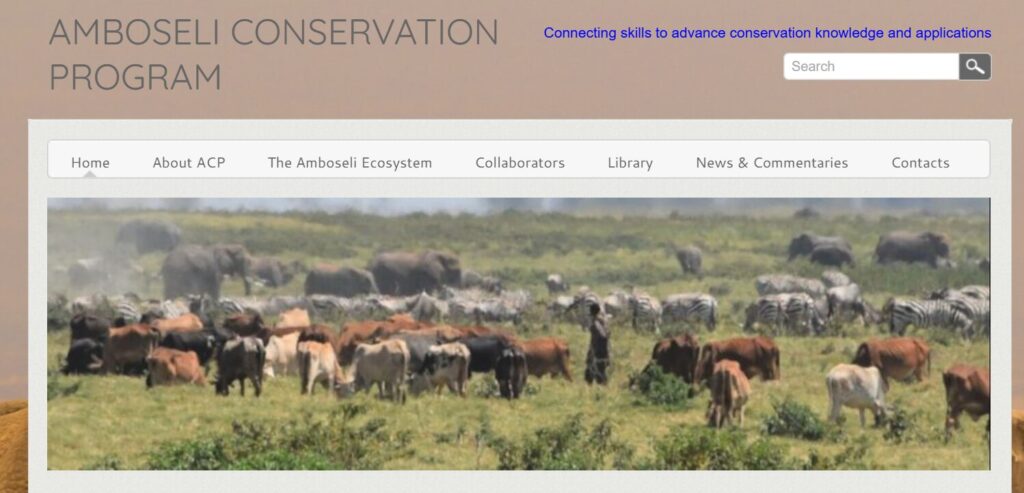
Amboseli Conservation Program (ACP)
The Amboseli Conservation Program (ACP) is one of Africa’s longest-running and most influential wildlife research…
4-Day Amboseli Flying Safari from Nairobi
Our 4-Day Amboseli Flying Safari from Nairobi is the perfect upgrade for travelers who want…
Complete GUide to Amboseli Safaris and Tours
Amboseli National Park is one of Africa’s most iconic safari destinations—famous for huge elephant herds,…
Kimana Conservancy (Kimana Sanctuary): The Lifeline Corridor of the Amboseli Ecosystem
Kimana Conservancy, widely known as Kimana Community Wildlife Sanctuary, is one of the most important…
Full Guide to Conservation Efforts in Amboseli
Amboseli is not conserved by the national park alone. The Amboseli ecosystem is a living,…
The Ultimate Guide to Amboseli Conservancies: Community Lands, Corridors, and the Future of Elephant Conservation
Conservation in Amboseli is fundamentally landscape-scale. Elephants and other wide-ranging species do not survive on…